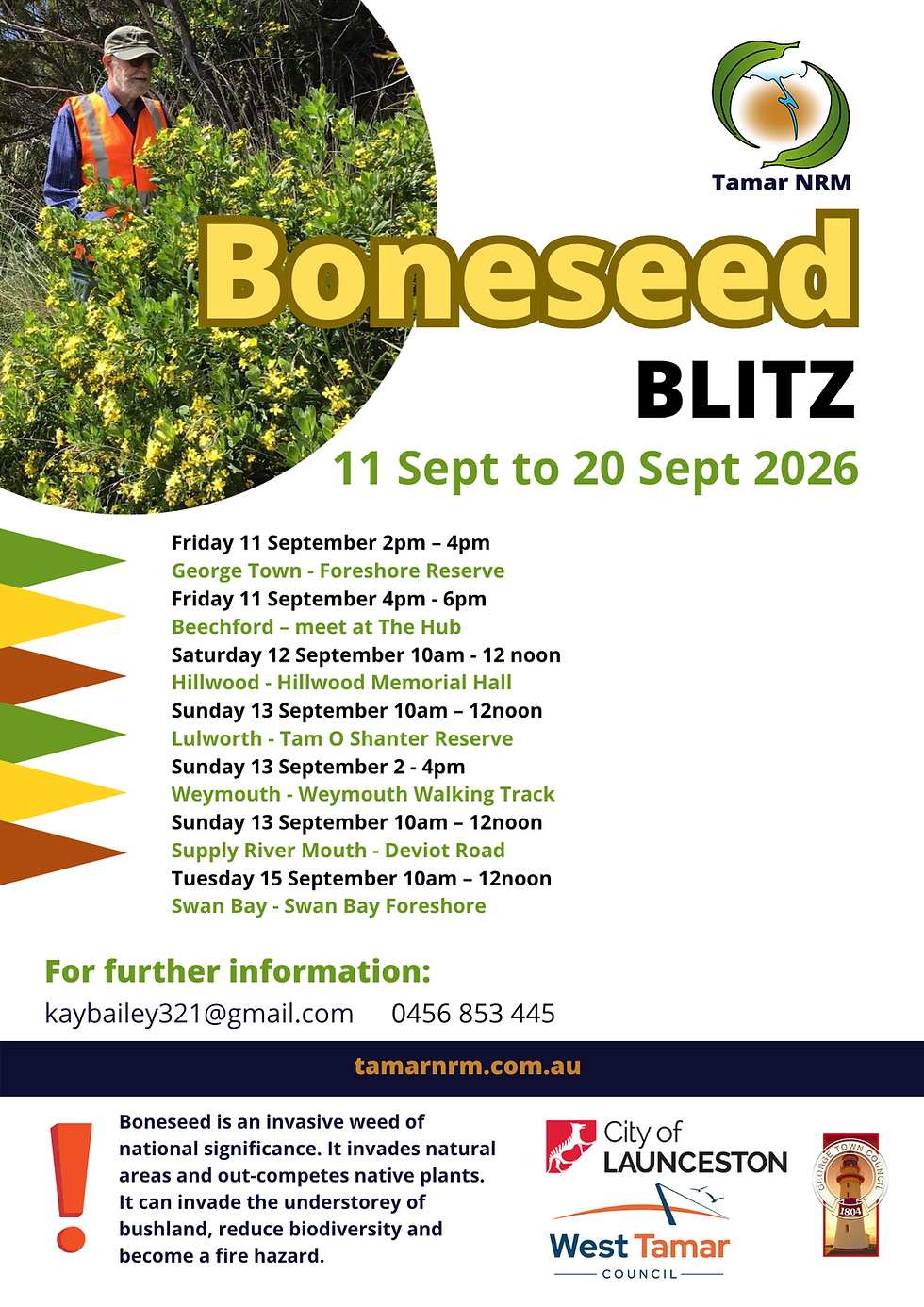
What do you know about Boneseed?
Keep reading to find out more about the plant and how you can be involved in its management!
Chrysanthemoides monilifera subsp. monilifera, commonly known as boneseed, is a shrub native to southern Africa. It is believed to have been introduced to Australia as an ornamental garden plant in the mid-1800s, although it was also used in some areas for sand-dune stabilisation.
Boneseed reproduces by seed, with a mature plant capable of producing up to 50,000 seeds per year. The seeds can be dispersed through the droppings of birds and other animals, as well as through human activity. They can also be spread by water, dumped garden waste and contaminated soil.

Boneseed aggressively invades native ecosystems ranging from coastal dunes and grasslands to woodlands. It can compete with native plants, particularly in areas where vegetation has been disturbed. It does not commonly persist in pasture because it has low tolerance of regular grazing and trampling. Boneseed is also sensitive to waterlogging, which can limit its establishment in wetter ecosystems.
Boneseed is a declared weed under Tasmanian biosecurity legislation, which means the risk it poses to Tasmania's natural resources and ecological processes is legally recognised. Boneseed is also classified as a Weed of National Significance, recognised for its invasive potential and significant social, economic and environmental impacts.
Managing boneseed is about more than just tidiness; it's about reducing the spread of a highly invasive species and limiting its impact. As boneseed is common across the Tamar Valley, each year Tamar NRM conducts a week-long 'Boneseed Blitz' to reduce boneseed populations and provide follow-up management of known infestations.
2025 was the Boneseed Blitz's 20th year, with 129 hours of volunteer time donated to the project, alongside support from organisations including the City of Launceston, West Tamar Council, George Town Council, Tasmania Parks and Wildlife Service, and the East and West Tamar Landcare groups.

While the ongoing project has successfully reduced the amount of boneseed found at each infestation site, seedlings continue to be found. This highlights why ongoing work is necessary to meaningfully limit the spread of boneseed through the region. Consistent monitoring allows us to find seedlings before they have a chance to mature and contribute further seeds to the soil seed bank.
This year aims to build on the great work of previous years, with a week's worth of facilitated boneseed removal events at various sites around the Tamar. If you join us at an event, you can expect to learn how to identify and control boneseed at various stages of its life cycle, understand the importance of ongoing control, and discover how community involvement is an integral part of maintaining a healthy Tamar Valley environment.
If you're interested in joining this year's Boneseed Blitz, please RSVP at https://www.tamarnrm.com.au/events.
You can also contact us at admin@tamarnrm.com.au if you have any further questions about boneseed, the Blitz, or how you can get involved!